
Spring pests in Northern California are on the move. Learn what to look for, when to act, and how to prevent infestations before they become costly.
If you’re a homeowner, start with the residential section below. If you manage a business or facility, jump to the commercial section for sector-specific guidance.
Every spring, we see the same pattern across Northern California. Rodents that sheltered in garages and crawlspaces over winter start moving again. Ants follow the moisture from spring rain indoors. Birds begin scouting vents, rooflines, and eaves before most property owners realize nesting season has started. Ground squirrels emerge on larger lots, rural properties, and ag-adjacent land and start burrowing in earnest.
This guide is based on what we actually see in the field, working across Chico, Redding, Red Bluff, Oroville, Yuba City, and the surrounding communities. It’s here to help you know what to watch for, what the early signs actually mean, and when it makes sense to act. No scare tactics, just practical, honest information from a company that has been doing this work in the North State for over 70 years.
By the time daytime temperatures in Chico, Red Bluff, Redding, and surrounding North State communities settle into the low 60s, pest activity has typically been building for several weeks. Ground squirrels have been waking from winter torpor since late February. Rodents that overwintered near heat sources are already exploring new areas. Ants have been following soil
moisture shifts toward foundations and slab edges. The visible surge in spring isn’t a starting point — it’s a signal that something has been developing quietly.Here’s what we typically see every spring across Northern California, what those early signs mean, and what property owners can do before a small issue turns into a bigger one.
For homeowners across Butte, Shasta, Tehama, Glenn, and Sacramento counties, the March through May window is the one that determines how the rest of the year goes. Address pest pressure early in the season and you’re usually dealing with something manageable. Wait until an infestation is visible and established, and the solution is almost always more involved.
For businesses — restaurants, warehouses, food facilities, schools, healthcare, and multi-unit properties — spring pest pressure adds compliance risk on top of operational disruption. Getting ahead of it is not just practical. It’s protection.
A practical checklist for both homeowners and businesses. Walk your property, know what to look for, and take action before pest season peaks.

California ground squirrels begin emerging from winter torpor in late February, and by March they’re fully active and reproducing. On larger rural properties, ranches, agricultural edges, and commercial land in Tehama, Shasta, and Butte counties, a few visible burrow openings in early spring can turn into an active colony problem within a matter of weeks.
What most property owners miss early in the season is how quickly the damage compounds. Burrow systems undermine irrigation lines, retaining walls, fence posts, and foundations. On agricultural properties, the structural damage to levees, berms, and field edges can be significant. A handful of openings in March becomes a much larger issue by May if left unaddressed.
Ground squirrel management in California now requires navigating rodenticide restrictions, which means professional trapping, exclusion, and habitat modification are often the most effective and legally sound approach. This is especially true on properties near waterways, orchards, or wildlife corridors.
Shelby’s serves large-property homeowners, farmers, and commercial land managers across Northern California for ground squirrel control. See our gopher and ground squirrel service page for details.

Nesting season is already underway across Northern California. Pigeons, starlings, house sparrows, and swallows begin scouting locations in February and actively nest from March through early summer. Common nesting sites include roofline vents, soffit gaps, chimney openings, behind solar panels, and around warehouse and commercial rooftop equipment.
Once a nest contains eggs or active young, it’s protected under the Migratory Bird Treaty Act — a federal law that makes removal illegal without a permit. This isn’t something you can work around once nesting starts. It’s a genuine constraint that limits your options significantly once nesting is established. The practical window to install exclusion and deterrents is before birds commit to a site, which in the North State means acting in the next few weeks.For commercial properties — warehouses with open loading bays, restaurants with rooftop equipment, schools, wineries, and food facilities — bird droppings create sanitation risks, slip hazards, and in some cases compliance issues. Nesting material in vents is also a fire hazard worth taking seriously.
Shelby’s provides bird exclusion for both residential and commercial properties across Northern California. See our bird removal page for service details.

Rodents — Norway rats, roof rats, and house mice — don’t disappear in winter. They find a warm structure and stay. Garages, crawlspaces, wall voids, and attics are the most common overwintering areas we find in homes across Chico, Oroville, and Red Bluff. In spring, increased food availability outside prompts more movement, more exploration, and active breeding.
The problem with spring rodent activity is that a small, manageable situation from winter can grow quickly. A pair of rodents nesting in a wall void in February can produce multiple litters by May. The earliest signs — droppings near appliances or in garage corners, scratching sounds in walls at night, a faint ammonia odor in enclosed spaces, or chew marks on wood or wiring — are worth acting on rather than waiting to see if the problem resolves itself. In a lot of cases, by the time homeowners hear scratching in the walls, the problem has already been there for a few weeks.
It typically doesn’t. And the longer a rodent problem goes unaddressed, the more entry points get established and the more difficult exclusion becomes.

Spring rains saturate the soil around foundations and slab edges, and ant colonies respond by moving upward toward drier ground — which often means the interior of a home or building. Argentine ants, odorous house ants, and pavement ants are all common in Northern California, and all become significantly more active once warmer temperatures arrive after a wet stretch.
One or two ants in the kitchen is rarely cause for concern on its own. Recurring trails in multiple rooms, or ants appearing consistently near bathrooms, under sinks, or along baseboards, is a different situation. It usually indicates a colony near or under the foundation, and it tends to get worse rather than better without treatment.
Ant activity is also one of the more reliable indicators that a structure has a moisture issue or a small entry point that warrants further attention. We often find both when investigating ant problems in older homes around Chico and Oroville, particularly in slab foundations with irrigation nearby.
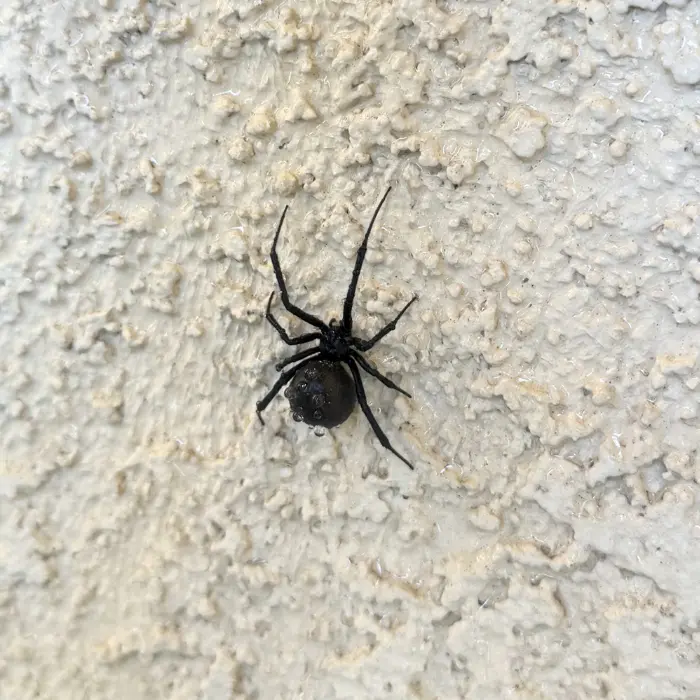
Spider populations increase in spring not because of the weather directly, but because their prey — flies, gnats, mosquitoes, and other insects — becomes abundant. Black widow spiders, which are common throughout Northern California, become more active and are often found in garages, woodpiles, block walls, stored items, and along exterior foundation areas as warmer weather arrives.
Most spiders around a property are not a serious concern. Repeated black widow activity near entry points, in areas where children or pets spend time, or inside living spaces is worth addressing. The practical first steps are reducing clutter and debris near the structure, which eliminates harborage, and addressing any insect activity that’s drawing spiders in.
For most homeowners, spring pest activity comes from two directions at once: the pests that were already in or near the structure over winter and are now more active, and the new pests moving in from outside as conditions change. Addressing one without the other tends to leave the problem half-solved.
A walk around the exterior of your home in early spring is one of the most practical things you can do before pest season gets going. You’re looking for anything that gives a pest easy access, a place to hide, or a reason to stay. On properties with outbuildings, irrigation systems, or dense landscaping, the exterior inspection matters even more.
Early Warning Signs Worth Acting On
The most common thing we hear from homeowners dealing with a significant pest issue is some version of: “I noticed it a couple months ago and figured it would go away.” Pest problems rarely resolve on their own. They tend to grow, and the difference between a manageable early-season situation and a more complicated infestation is often just a few weeks.
These are the signs worth taking seriously rather than waiting on:
Not every pest situation requires a service call, and we’ll always give you a straight answer about what actually needs professional attention and what doesn’t.
| Typically manageable on your own: | Worth calling Shelby’s: |
|---|---|
|
A few ants with no visible trail or recurring pattern
|
Droppings in multiple areas, or signs in the kitchen and attic
|
|
A single spider in a garage or shed, no egg sacs |
Scratching in walls or the attic at night |
|
One isolated rodent sighting with no other signs
|
Ants returning in multiple rooms after cleaning
|
|
A single entry point you can identify and seal yourself
|
Bird activity around vents, eaves, or the roofline
|
|
|
Burrows appearing near the foundation or in the yard
|
|
|
Any situation where you’re not sure what you’re looking at
|
One thing worth keeping in mind: a single ant trail in the kitchen may be manageable. Recurring trails in three rooms, or ants appearing consistently near plumbing, is a different situation and usually means there’s a colony established nearby. Similarly, one rodent sighting in the garage is different from droppings in the garage, kitchen cabinets, and attic. Context matters, and if you’re unsure what you’re looking at, a free inspection takes the guesswork out of it.
Walk your property with Shelby’s Residential Spring Pest Prevention Checklist. Covers exterior entry points, yard conditions, and what to look for inside and outside your home before pest season peaks.
A quick inspection early in the season gives you more options and usually costs less than waiting on an established problem. Shelby’s offers free inspections with no obligation.
For businesses in Northern California — restaurants, food processing facilities, warehouses, schools, medical offices, and multi-unit properties — spring pest activity is a compliance issue as much as it is an operational one. Health departments, OSHA, CDFA, and insurance carriers all have pest-related expectations that don’t pause for the season. Spring, when pest pressure increases across the board, is the time when those expectations are hardest to meet without a proactive plan already in place.
Spring brings increased roach, ant, and rodent pressure at the same time. German cockroach reproduction accelerates significantly in warmer temperatures, and ant colonies that have been quiet over winter begin foraging aggressively once the weather shifts. Dumpster areas, floor drains, and gaps around kitchen equipment are the most common entry and harborage points we find during spring commercial inspections. A failed health inspection during this window is almost always tied to pressure that built up before the first service call was made.
Ground squirrels and rodents are the primary spring concern for warehouse and distribution facilities across the Central Valley and Northern California foothills. Burrow systems near loading docks create both structural problems and active rodent access pathways. Open loading bays and rooftop equipment are also common spring bird nesting sites — once birds establish nests in warehouse overhangs or dock areas, the sanitation and cleanup challenge becomes significant.
These properties face the highest pest pressure in spring. Rodent activity near grain storage, processing equipment, and loading areas is a food safety and regulatory issue — not just an inconvenience. Ground squirrel populations on agricultural land can surge rapidly after winter dormancy, and the damage to irrigation systems, berms, and storage structures can become significant quickly. Documentation of pest management activity is essential for CDFA and federal food safety compliance.
These facilities have the added complexity of protecting vulnerable populations. Recurring spring ant activity in classrooms, employee breakrooms, and shared kitchens requires a documented, consistent treatment program. HOAs and apartment complexes face spring rodent pressure as populations move between units through shared wall voids and utility penetrations. For healthcare facilities, any pest activity in patient areas requires immediate documented response.
A reactive approach — calling for service after a sighting or a complaint — is typically the most expensive way to manage commercial pest control. It’s also the approach most likely to result in a documented violation or a failed inspection.
A practical spring pest management plan for a Northern California business should cover:
Shelby’s works with businesses across Northern California on recurring commercial programs that include all of the above. We provide written documentation with every service and understand the specific compliance requirements for food service, food processing, agriculture, healthcare, and multi-unit housing.

The best time to schedule a commercial spring inspection is before you start seeing activity — not after. Most pest problems in restaurants, warehouses, and food facilities don’t show up overnight. By the time something is visible during a shift or flagged during a health inspection, it’s usually been building for a few weeks. A quick walk-through in late February or early March gives us a chance to catch early signs, close entry points, and get a service plan in place before spring pressure peaks. It’s a lot easier to manage from the front end of the season than the back.
Shelby’s Commercial Spring Pest Prevention Checklist covers exterior inspection, entry point assessment, interior risk areas, and documentation requirements — designed for restaurants, warehouses, food facilities, multi-unit properties, and more.
Shelby’s provides commercial pest management programs for businesses across Northern California, including documentation with every service call. Contact us to schedule a spring commercial inspection.
Prevention isn’t about eliminating every pest from the environment around your property. That’s not realistic or necessary. It’s about removing the specific conditions that make your property attractive: food, water, shelter, and easy access. Take those away, and most pests move on to easier territory.
The following actions are consistently effective for properties across Northern California and address the spring pests most likely to cause problems in this region.
Exterior: Before Peak Season Begins
Interior: What’s Worth Checking in Early Spring
Routine Service: One of the Most Effective Prevention Tools Available
A consistent, scheduled pest service is one of the most effective things a Northern California homeowner or business can do to stay ahead of pest pressure. Routine service — whether monthly or quarterly depending on the property and risk level — allows a trained technician to catch early activity before it becomes an established problem.
Here’s how this usually plays out. A single ant scout that finds food will recruit hundreds of workers within 24 to 48 hours. A pair of rodents nesting in a wall void in early spring can produce multiple litters before summer. Early intervention is nearly always faster, simpler, and less costly than addressing a population that has had weeks or months to establish itself.
The pests we see most consistently becoming active in spring across Northern California are ground squirrels, ants, rodents (rats and mice), birds scouting nesting sites, and spiders. Activity typically increases between March and May as soil temperatures rise and daylight hours lengthen. In Chico, Redding, Red Bluff, Oroville, and surrounding areas, we usually start seeing this pick up as soon as the weather settles into a warmer pattern after the last stretch of winter rain.
Late February to early March is typically the most effective window — before peak activity begins rather than after it’s visible. For bird exclusion specifically, timing matters significantly, since once a nest contains eggs or young, removal options become limited under federal law. For rodents, ants, and ground squirrels, getting ahead of the season means you’re usually dealing with something smaller and more manageable.
They can be, especially on larger properties, agricultural land, and rural lots across Butte, Shasta, and Tehama counties. California ground squirrels emerge from winter torpor in late February and are actively burrowing and reproducing through spring. A few visible burrow openings in March can turn into a much larger colony situation by May. The damage to irrigation systems, retaining walls, and foundations tends to be more significant than most property owners expect early in the season.
Most birds are protected under the Migratory Bird Treaty Act. Once a nest contains eggs or young, it generally cannot be disturbed or removed without a federal permit. The practical window for installing exclusion and deterrents is before nesting is established, which in Northern California typically means late February through mid-March. After that, the better approach is usually to wait until the nesting cycle is complete and then address the site before the following season.
Spring rain saturates the soil around foundations and slab edges, and ant colonies respond by moving toward higher, drier ground — which often means the inside of a home. Argentine ants and odorous house ants are particularly common in Northern California and become significantly more active once the soil warms after a wet stretch. We see this most often in homes with irrigation nearby or slab foundations close to landscaping — especially after a stretch of rain. A recurring trail in multiple rooms typically means there’s a colony established near or under the foundation.
A one-time sighting in the garage is different from multiple signs across the home. The indicators that suggest an active, ongoing problem are droppings in more than one area, greasy rub marks along walls or baseboards, scratching or movement sounds in walls or the attic at night, chew marks on wiring or structural wood, and a faint ammonia odor in enclosed spaces. If you’re seeing two or more of those, it’s worth having someone take a look rather than waiting to see if things improve on their own.
The exclusion-focused approach that Shelby’s specializes in — sealing entry points with physical materials — is entirely non-toxic. No chemicals, no bait stations. When treatments are used for active pest activity, we select products appropriate for use around families and pets and provide clear guidance on any precautions. We’re always happy to discuss what’s being used and why before any service.
Cost depends on the type of pest, the size of the property, and whether exclusion work or treatment is needed. Shelby’s offers free inspections and estimates, so the first step is always an assessment with no obligation. What we typically find is that addressing a problem early in the season — when it’s smaller — costs less than the same work done after a population has had time to establish. Routine service programs are also generally more cost-effective than repeated one-time treatments for recurring problems.
German cockroaches, ants, and rodents are the three we see most consistently in restaurant and food service environments as spring gets underway. German cockroach reproduction accelerates significantly when kitchen temperatures rise, and ant colonies that were quiet over winter start foraging aggressively once conditions warm — often entering through floor drains, gaps around equipment, and utility penetrations near prep areas. In Chico, Redding, and surrounding areas, we typically start seeing commercial kitchen pressure pick up in March. A proactive inspection before that window is almost always faster and less disruptive than a reactive call after something is spotted.
For most commercial properties — restaurants, food facilities, warehouses, and multi-unit housing — monthly service during spring and summer is one of the more practical ways to stay ahead of the season. Quarterly service can work well for lower-risk office or retail environments. The right frequency really depends on the property type, what’s been found in past inspections, and what compliance requirements apply. What we find most often is that businesses that skip spring service end up needing more intensive treatment later in the season, which typically costs more and takes more time to resolve. Shelby’s can recommend a program based on your specific property and risk level — starting with a free inspection.

Spring pest pressure in Northern California builds quickly. The window to act before problems develop — whether that’s sealing entry points before rodents move in, installing bird exclusion before nesting season locks you out, or scheduling a commercial inspection before health inspection season — is right now.
Shelby’s Pest Control has been serving the North State for over 70 years. We know Northern California’s pest patterns, how the seasons play out differently across the region, and what properties from Sacramento to Redding are actually dealing with. Our approach is practical and prevention-focused — we’ll always tell you what you actually need, and what you don’t.
Serving Chico • Redding • Red Bluff • Oroville • Yuba City • Sacramento • and all of Northern California
We use cookies to improve your experience on our site. By using our site, you consent to cookies.
Manage your cookie preferences below:
Essential cookies enable basic functions and are necessary for the proper function of the website.
These cookies are needed for adding comments on this website.
Statistics cookies collect information anonymously. This information helps us understand how visitors use our website.
Google Analytics is a powerful tool that tracks and analyzes website traffic for informed marketing decisions.
Service URL: policies.google.com (opens in a new window)
Google reCAPTCHA helps protect websites from spam and abuse by verifying user interactions through challenges.
You can find more information in our Cookie Policy and Privacy Policy.